
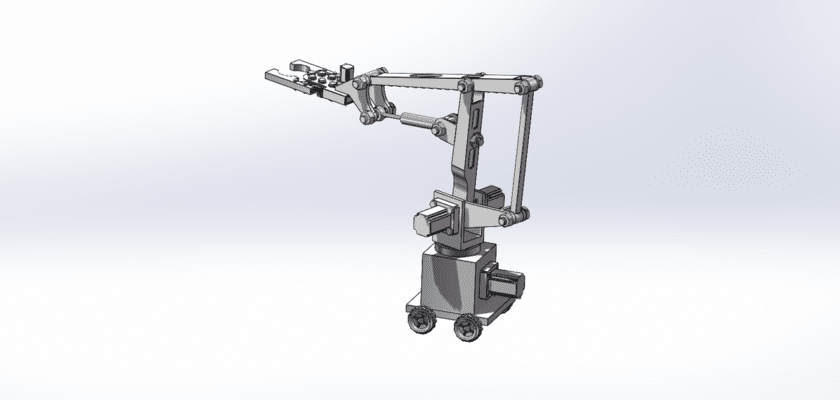
A Multi-Link Robot Drawing is a detailed technical illustration that depicts the design, components, and functionalities of a multi-link robotic system, which is used in various applications such as automation, manufacturing, and research. This drawing is essential for engineers, developers, and operators involved in the design, operation, and maintenance of multi-link robots.
Características principales:
- Disposición general: A comprehensive view of the multi-link robot, showcasing its structure and the arrangement of key components in a typical operational environment.
- Linkage Structure: Detailed illustrations of the robot’s segments, including:
- Campo de golf: Information about the individual segments (links) of the robot, which connect at joints to form the robotic arm.
- Articulaciones: Descriptions of the types of joints (e.g., revolute, prismatic) that allow for various movements and flexibility.
- Grados de libertad: Specifications indicating the number of degrees of freedom provided by the multiple links, allowing the robot to perform complex tasks and reach a wide range of positions.
- Efector final: Descriptions of the tool or gripper attached to the end of the robot arm, including:
- Diseño de pinza: Details on the design and functionality of the end effector for specific applications such as handling, welding, or painting.
- Herramientas intercambiables: Information on the capability to switch between different end effectors based on task requirements.
- Sistema de control:Detalles sobre la unidad de control que gestiona las operaciones del robot, incluyendo:
- Controller Specifications: Information on the controller used for programming and controlling the robot’s movements and tasks.
- Interfaz de usuario: Illustrations of control panels or software interfaces that allow operators to program tasks and monitor performance.
- Actuators and Motors: Information on the types of actuators used for movement, including:
- Servo Motors and Stepper Motors: Specifications on the motors that drive the joints and provide precise control over movements.
- Sensores y sistemas de retroalimentación: Diagrams showing various sensors integrated into the robot, such as:
- Sensores de posición: Used for feedback on the joint angles and position of each link.
- Force Sensors: To detect the amount of force being applied during operations.
- Fuente de alimentación:Información sobre la fuente de energía, incluyendo:
- Especificaciones de la batería: Details on the type and capacity of batteries used, ensuring reliable operation.
- Características de seguridad: Information on safety mechanisms, such as emergency stop functions, collision detection systems, and protective enclosures to ensure safe operation in various environments.
- Características de conectividad:Información sobre capacidades de comunicación, incluyendo:
- Comunicación inalámbrica: Details on Bluetooth or Wi-Fi connectivity for remote control and data exchange.
- Integración con otros sistemas: Information on how the robot can communicate with external devices or networks for enhanced functionality.
- Puntos de acceso de mantenimiento:Orientación sobre áreas diseñadas para fácil acceso durante el mantenimiento y la reparación, facilitando el servicio eficiente del robot.
- Especificaciones de rendimiento:Resumen de métricas de rendimiento clave, como capacidad de carga útil, alcance, velocidad y precisión, que proporcionan información esencial para la planificación operativa.
- Contexto de aplicación: Brief descriptions of typical applications for multi-link robots, such as in automotive assembly, packaging, material handling, and research laboratories.
This drawing serves as a vital reference for anyone involved in the operation and maintenance of multi-link robots, ensuring effective performance, reliability, and adherence to industry standards across various automation applications.


