
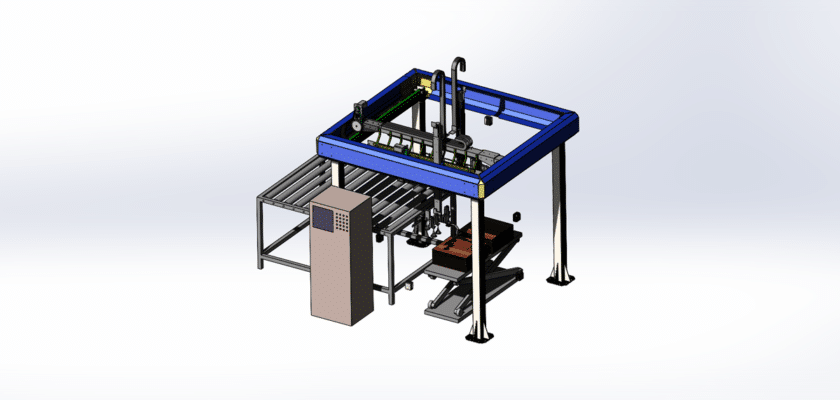
A Robot Flat Loading Drawing is a detailed technical illustration that depicts the design, components, and operational workflow of a robotic system specifically designed for the automatic loading of flat materials, such as sheets, plates, or panels. This drawing is essential for engineers, operators, and technicians involved in the development, operation, and maintenance of automated flat loading systems.
Características principales:
- Disposición general: A comprehensive view of the entire flat loading system, showcasing the arrangement of robots, loading stations, and associated equipment within the operational area.
- Brazos robóticos: Detailed illustrations of the robotic arms used for loading flat materials, including:
- Configuración del brazo:Información sobre la estructura, enlaces y articulaciones de los brazos robóticos, destacando sus grados de libertad para movimientos precisos y flexibles.
- Efectores finales: Descriptions of specialized tools or grippers designed for handling flat materials, such as suction cups, clamps, or specialized fixtures that ensure secure handling.
- Mecanismo de carga: Diagrams illustrating the mechanism used to load flat materials onto machines or into storage, including:
- Sistemas transportadores: Details on conveyor belts or rollers that transport flat materials to and from the loading area.
- Orientation Systems: Information on systems that ensure flat materials are correctly oriented before loading.
- Sistemas de control: Information about the central control unit managing the automated loading processes, including:
- Controladores lógicos programables (PLC): Descriptions of PLCs or industrial computers used for coordinating robot movements and loading operations.
- Interfaz de usuario:Ilustraciones de paneles de control o interfaces de software que permiten a los operadores programar tareas, monitorear el rendimiento y realizar ajustes.
- Características de seguridad:Información sobre los mecanismos de seguridad integrados en el sistema, tales como:
- Sistemas de parada de emergencia: Details on emergency stop buttons easily accessible near the loading area.
- Protecciones y sensores de seguridad:Información sobre barreras protectoras, cortinas de luz y sensores diseñados para mejorar la seguridad del operador durante la operación.
- Material Fixtures: Illustrations of fixtures or supports used to stabilize flat materials during loading, ensuring accuracy and preventing damage.
- Integración con otros sistemas: Information on how the flat loading system integrates with other automated processes, such as CNC machines, cutting systems, or assembly lines, to streamline workflow.
- Sistemas de control de calidad:Descripciones de medidas de control de calidad integrado, incluyendo:
- Estaciones de inspección: Information on sensors or cameras that verify the correct loading and positioning of flat materials.
- Equipo de prueba: Details on any testing apparatus used to ensure the quality of the loaded materials.
- Puntos de acceso de mantenimiento: Guidance on areas designed for easy maintenance and repair, facilitating efficient servicing of the robotic equipment.
- Especificaciones de rendimiento: Summary of key performance metrics, such as loading speed, accuracy, and operational efficiency, providing essential information for optimization.
- Contexto de aplicación: Brief descriptions of typical applications for automated flat loading systems across various industries, including manufacturing, metalworking, packaging, and logistics.
This drawing serves as a vital reference for anyone involved in the design, operation, and maintenance of robotic flat loading systems, ensuring effective performance, reliability, and adherence to industry standards in automated material handling.


