
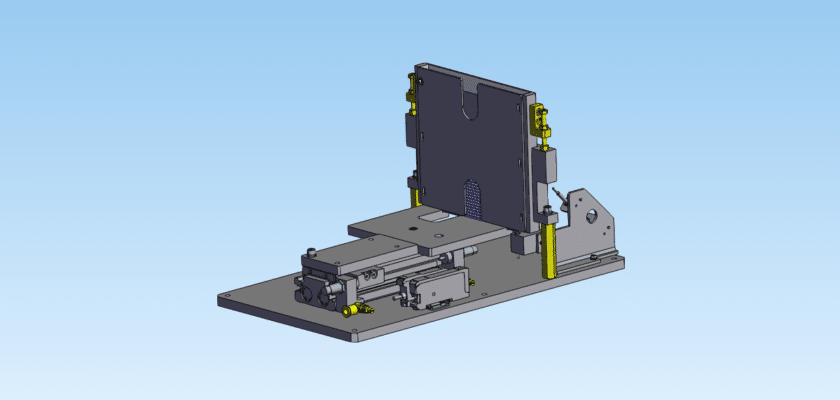
Streamline your production cycle with our high-performance Bar-Shaped Workpiece Feeding Mechanism drawing. Specifically engineered for the automated handling of cylindrical and elongated parts, this mechanism is a vital component in reducing cycle times for CNC lathes, grinding machines, and cutting stations. Whether you are managing solid steel rods, aluminum tubes, or plastic shafts, this feeding system provides a consistent, vibration-free transition from the storage magazine to the machining spindle.
The provided technical documentation includes a complete breakdown of the escapement logic and the pusher assembly required for sequential part delivery. It focuses on maintaining axial alignment to prevent jamming or surface marring of precision-ground workpieces. By downloading this drawing, you gain access to a modular architecture that can be adjusted for various bar diameters and lengths. The CAD data highlights the structural stability needed to handle high-inertia loads and the sensor mounting points necessary for “part-present” detection. Integrating this proven feeding solution into your workflow eliminates manual loading bottlenecks and significantly enhances the safety and throughput of your automated manufacturing cell.
Caractéristiques principales :
- Adjustable Diameter Channels: Features a flexible guiding system that can be quickly reconfigured to accommodate different bar stock diameters without swapping entire modules.
- Low-Vibration Pusher Assembly: Optimized drive geometry designed to maintain constant pressure on the workpiece, ensuring a smooth and steady feed rate.
- Sequential Escapement Logic: A robust mechanical design that ensures only one bar is released at a time, preventing double-feeding and machine downtime.
- Anti-Marring Contact Surfaces: Specified with polymer linings or soft-touch rollers to protect the surface finish of delicate or pre-polished workpieces.
- High-Speed Retraction Cycle: The mechanism is engineered for rapid return strokes, minimizing the “air time” between part changes and maximizing machine utilization.


