
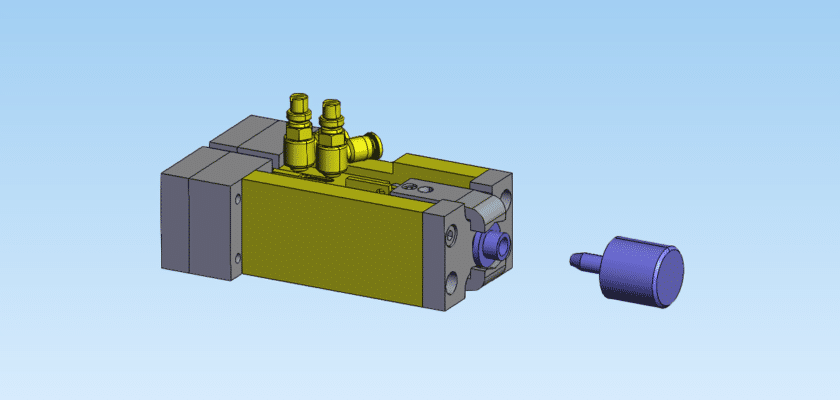
Minimize deflection and maximize force accuracy with our professional Mechanical Pressing Structure drawing. The integrity of any pressing operation—be it bearing insertion, riveting, or material forming—depends entirely on the rigidity of the supporting frame. This technical CAD resource provides a comprehensive blueprint for high-stiffness C-Frame et H-Frame architectures. By downloading this file from MechStream, you gain access to a design engineered to withstand high tonnage while maintaining perfect parallelism between the ram and the bolster plate.
The design featured in this package focuses on Stress Distribution and Geometric Stability. The drawing includes detailed layouts for heavy-gauge steel plates, reinforced gussets, and precision-machined guide ways. By utilizing this blueprint, you can eliminate “frame spring”—the elastic deformation that occurs under load—which is the primary cause of misaligned press-fits and uneven tool wear. This is a critical asset for designers of automotive assembly stations, laboratory crush testers, and metal fabrication shops.
Our technical documentation prioritizes structural analysis and long-term durability. The assembly features specific weldment procedures and bolting patterns designed to dissipate vibration and resist fatigue over millions of cycles. Whether you are building a manual 2-ton arbor press or a 50-ton automated hydraulic station, this drawing provides the exact plate thicknesses, ribbing configurations, and mounting tolerances required for a professional-grade industrial installation.
Caractéristiques principales :
- Optimized Load-Path Geometry: Engineered to keep the center of force aligned with the structural neutral axis, reducing angular deflection.
- Precision Pillar Guiding: Detailed designs for oversized guide posts and bronze bushings to maintain sub-millimeter ram alignment during the entire stroke.
- Modular Bolster Plate: Features a T-slotted or grid-patterned base for rapid tool changeovers and secure fixture mounting.
- Integrated Force Sensing Mounts: Pre-defined locations for load cells and LVDTs to allow for real-time “Force vs. Distance” monitoring.
- Vibration-Dampening Base: Includes blueprints for heavy-duty floor mounts or isolator pads to prevent energy transfer to the surrounding facility.


