
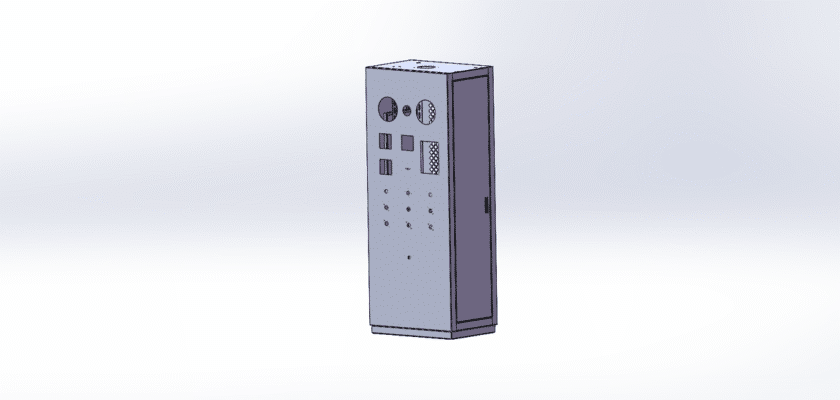
Are you developing a product validation process or a structural testing lab? Our Simulated Load Table drawing provides the complete engineering blueprint for building a robust, high-stiffness test bench. This CAD file is an essential asset for mechanical engineers, R&D labs, and test technicians who need to apply controlled forces to a component and validate its durability.
A simulated load table is the foundation of any serious mechanical testing rig. It is designed to provide an ultra-rigid, stable platform (often a T-slot table) for securely mounting a “unit under test” (UUT). The structure is engineered to withstand and react to the high forces applied by hydraulic, pneumatic, or electric actuators, allowing you to accurately simulate real-world operational stresses, conduct fatigue analysis, or perform destructive testing.
This downloadable drawing package is your complete fabrication guide. It contains all structural frame details, the precise T-slot grid layout for universal clamping, and the necessary reinforcements to ensure zero-flex performance. Download this file to build a custom test rig that delivers accurate, repeatable, and reliable data for your next product validation.
Principais recursos:
- High-Stiffness Frame: Details a heavy-duty, reinforced steel frame, engineered to absorb high reaction forces and vibration without flexing, ensuring data accuracy.
- Precision T-Slot Table Top: Features a precision-machined T-slot grid on the mounting surface, providing a flexible and universal system for clamping test specimens and fixtures.
- Actuator Mounting Provisions: The design includes reinforced brackets and clear mounting points for hydraulic, pneumatic, or electromechanical actuators to apply loads.
- Vibration Isolation: The drawing incorporates provisions for heavy-duty leveling feet and vibration isolation pads to decouple the test rig from the floor.
- Modular & Scalable Design: The structural elements are designed to be modular, allowing for easy modification or scaling of the table size for different test setups.


