
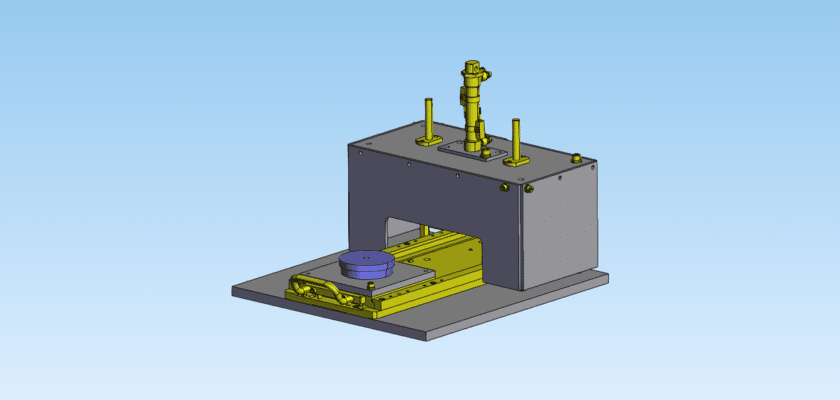
Ensuring the structural integrity and seal quality of hollow components is a critical step in modern manufacturing. This Workpiece Airtightness Verification Fixture CAD drawing provides a complete engineering solution for high-precision leak detection. Designed for industries ranging from automotive fuel systems to medical fluid containers, this fixture is engineered to isolate the internal volume of a part and verify its ability to hold pressure or vacuum. By providing a rigid and perfectly sealed interface, this design eliminates “false failures” caused by poor fixture sealing, ensuring that your quality control data remains accurate and repeatable.
By downloading this professional drawing, you gain access to a specialized assembly that includes high-performance sealing interfaces and integrated pneumatic ports. The design features a quick-clamping mechanism that applies uniform pressure to gaskets or O-rings, creating a temporary airtight environment for the testing cycle. The blueprint also includes dedicated mounting points for pressure transducers or mass flow sensors, allowing for seamless integration into automated testing benches. Whether you are performing simple bubble immersion tests or advanced differential pressure decay analysis, this CAD resource provides the foundational architecture needed for a high-throughput inspection station.
Key Features:
- High-Compression Sealing Jaws: Features custom-contoured seals designed to provide zero-leakage contact points on complex workpiece geometries.
- Integrated Pneumatic Logic: Includes pre-designed air circuits for both the clamping cylinders and the test medium injection, ensuring synchronized operation.
- Interchangeable Nesting Blocks: The fixture base is modular, allowing for quick-change inserts to accommodate different part sizes or model variations.
- Sensor Integration Ports: Features standardized threaded ports for mounting high-precision pressure sensors or air-leak testers directly to the fixture body.
- Fail-Safe Clamping System: Designed with mechanical or pneumatic interlocks that prevent the test from starting until the part is securely and safely clamped.


