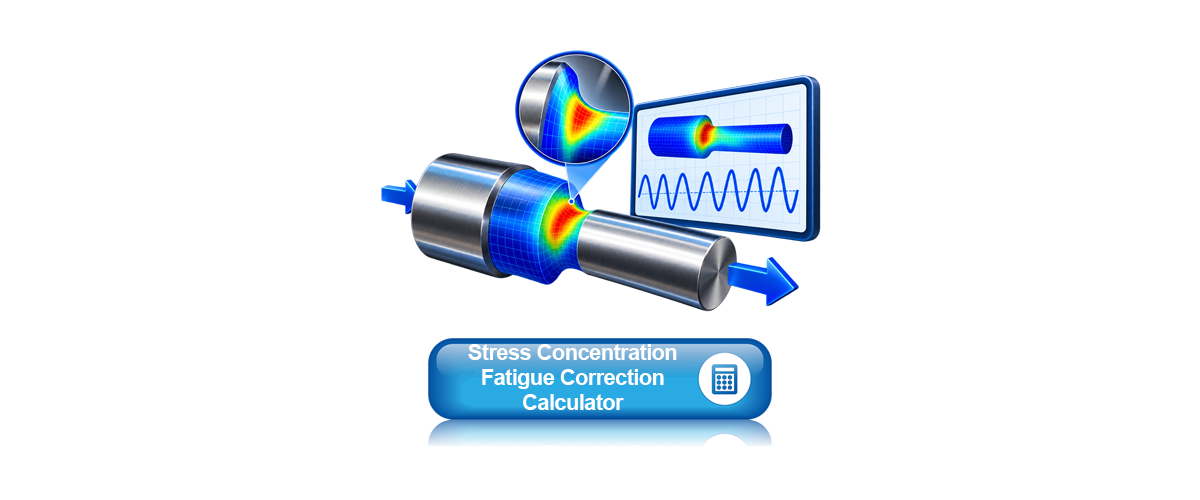
The Stress Concentration Fatigue Correction Calculator is a practical engineering tool designed to evaluate how geometric discontinuities affect fatigue performance under cyclic loading. Using established fatigue analysis equations, this calculator helps engineers determine the fatigue stress concentration factor (Kf), notch sensitivity factor (q), corrected alternating stress, and stress amplification percentage. It also supports Peterson notch sensitivity calculations and Modified Goodman fatigue safety factor assessments. Ideal for mechanical engineers, structural designers, and manufacturing professionals, the Stress Concentration Fatigue Correction Calculator simplifies preliminary fatigue analysis of shafts, fillets, grooves, holes, and notched components. Improve mechanical design reliability, evaluate potential fatigue risks, and optimize component geometry with accurate, formula-based engineering calculations.

Calculation mode and units

Choose how the notch sensitivity is obtained and whether a Modified Goodman fatigue safety factor is required.

Calculation mode

Values are converted internally to MPa. Changing the unit converts values already entered.
Notch radius and Peterson parameter always share this unit.

Material properties

Material selection is informational. No property is filled in automatically.

Validated, corrected component endurance limit (surface, size, load, temperature and reliability effects). It is never assigned automatically.
Prevents the notch effect from being counted twice.
Used only to check for local yielding at the notch root and for the first-cycle yield check. Required for the yield-adjusted mean stress method.

Stress concentration

كt must come from a geometry-specific chart, FEA, measurement or validated reference, based on the same nominal stress definition used below.

Elastic factor, Kt ≥ 1.
0 = notch-insensitive within the model, 1 = fully notch-sensitive (Kف = Kt). Take from notch-sensitivity charts or test data.

Loading parameters

Nominal stresses at the notched section. Tension is positive, compression negative.

Stress input method